Hot Take: Cupping Should be an Informed Therapeutic Decision, Not an Add-On
The topic of cupping, and when to use it in my practice, has been on my mind lately. If you clicked on this blog post, you likely already know essentially what cupping is, but in the case that you clicked on this article and have no idea what I’m talking about, I’ll take a second to explain. Cupping is a therapeutic technique that healthcare practitioners such as massage therapists, acupressure therapists, physiotherapists, and physical therapists may use that applies silicone, plastic, or glass cups to the skin using a few different techniques. The techniques create suction and pull the skin and tissue up into the cup.
I explain it to my clients this way: most massage therapy techniques apply pressure to the tissue, using compression. Cupping, on the other hand, can help to break up adhesions (“knots”) by using decompression instead. If we think of adhesions like knots, then we can further that metaphor by saying that if you are trying to untie a knot, often times it’s better to try to create space within the knot so it can unravel rather than pressing on it and making the knot tighter. Please understand that the adhesions, or knots, we feel in our tissue are not actually our muscles knotted together, but usually fascia (connective tissue) that has become stuck and somewhat bound up due to a number of possible reasons. These may also be referred to as trigger points.
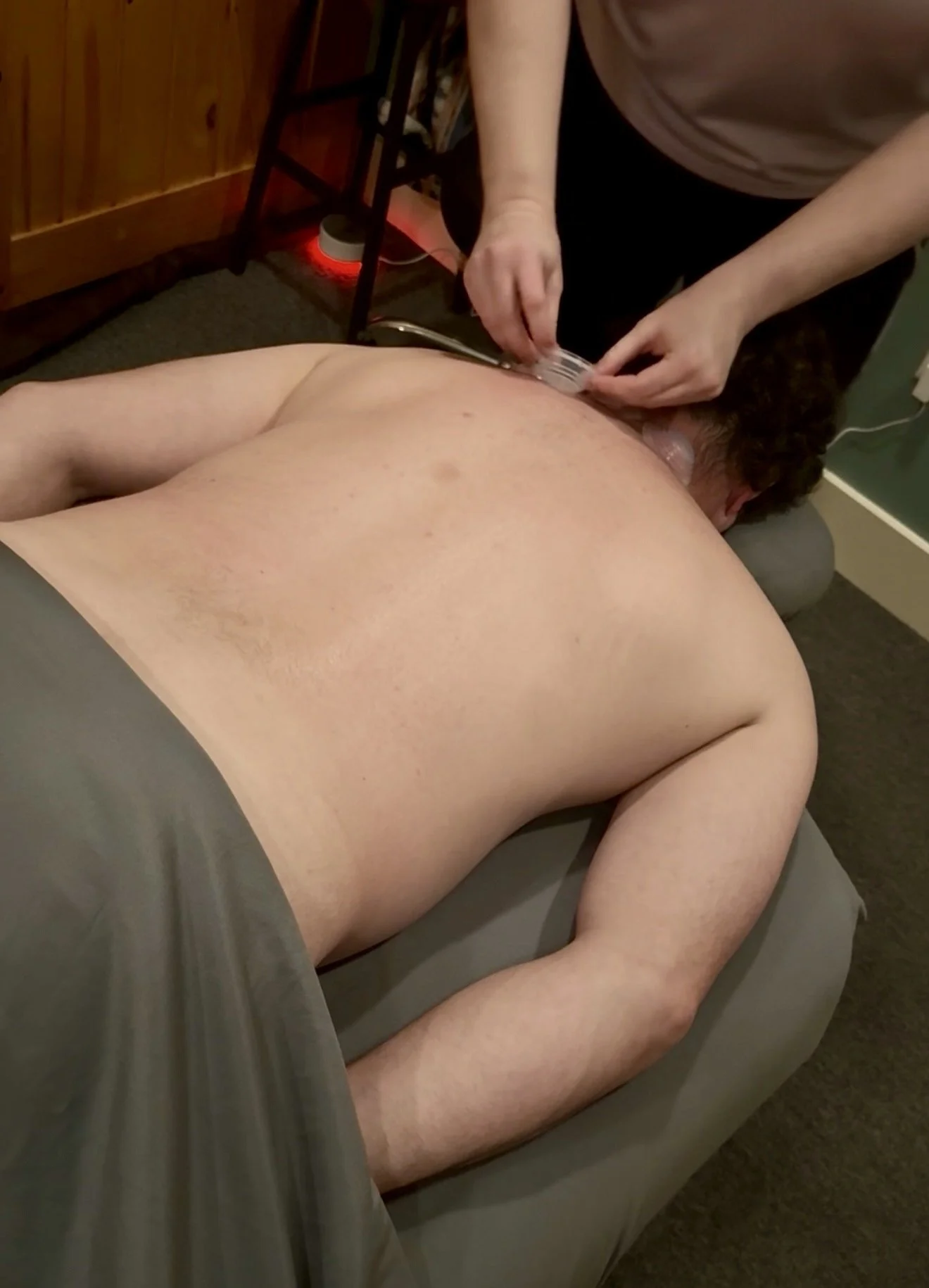
Onto the point of this article: cupping is a therapeutic technique, not a fluffy, feel-good application like a foot scrub or a scalp massage. In my training and professional experience, I’ve seen cupping do some extraordinary things, like breaking up a large adhesion in a client’s back I’d been working on weekly for over a month (cupping also significantly reduced her pain). I’ve also seen cupping help an athletic client regain full range of motion in their ankle and foot after a calcaneal tendon tear. Each time I’ve seen great results from cupping, it has been in the context of recovering from an injury or dealing with an adhesion that is causing the client pain. Cupping outside of these contexts appears to have no significant impact on outcomes at best, and at worst it can interrupt, annoy, hurt, or otherwise pull the client out of parasympathetic relaxation.
I’m sure those that disagree with me would argue that a therapeutic massage isn’t necessarily meant to be relaxing, but I disagree with that assertion because our nervous system is inextricably tied into our fascia and musculature, and our nervous system literally sets the tone in our bodies. So if cupping is painful enough for the client to tense up and guard, just as in other forms of bodywork, it’s possibly doing more harm than good. This brings me to my next point: cupping is not necessarily right for everyone, and it is the professional’s responsibility to know the difference.
As a licensed massage therapist in private practice, my clients come to me not only to feel better, but for my expertise and experience. As a healthcare provider, even if massage therapy is still often seen as alternative healthcare in western medicine, I want the best therapeutic outcomes for my clients, and I’m supposed to be the expert. Why, then, would I put a valid therapy, one that is right for some of my clients but not necessary or productive for others, behind a paywall? Doing so undermines my professional judgement and limits my ability to effectively treat my clients to the best of my ability while putting the burden of therapeutic decision on the client (and their wallet) when they are often without the proper training and knowledge to make such a judgement. This is not to say that my clients don’t know when cupping is a productive therapy for them, because they are the highest authority when it comes to their own body, but to put the burden of therapeutic decision-making entirely on the client rather than through informed consent is, to be blunt, negligent.
Therefore, I have built my practice around the idea that my tools and knowledge come as part of the overall package when clients book a massage session with me. This way, if I determine that cupping might be helpful while performing a massage service, I can gain informed consent in the session without taking advantage of the inherent power dynamic between therapist and client by pushing an up-charge on them while they’re on the table. The add-ons I charge extra for are not tied to therapeutic outcomes and/or they add time to the session (therefore the client is paying for my time, not necessarily the tool or technique).